
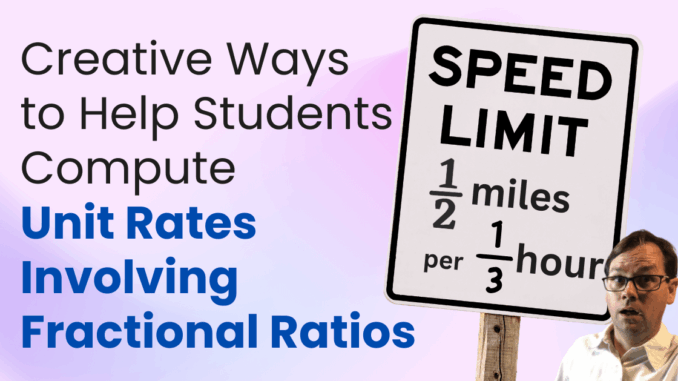
Many students can compute simple rates (like “miles per hour”), but when the quantities involved are fractions, things get tricky. The standard 7.RP.A.1 requires them to compute unit rates when ratios involve fractions (lengths, areas, or other quantities), which often shows up in real‑world problems like speed, cost per item when weights or amounts are fractional, etc.
Tip 1: Start with the Concrete — Real-World Examples They Know
Before diving into the more complex portions of this standard, ground the concept in familiar, real-life scenarios that make ratios and unit rates intuitive. When students hear “unit rate,” they might draw a blank—but when they hear “miles per hour” or “dollars per pound,” they instantly understand the context.
Why This Works:
Starting with what students already know builds confidence and hooks their attention. It also gives a meaning to the math: you’re not just dividing fractions, you’re figuring out how fast, how much per item, or how much per hour.
How to Do It:
- Begin the lesson with real-world comparisons:
Ask, “What does it mean when the speed limit is 65 miles per hour?”
or “If bananas cost $1.80 for 3 pounds, how much is it per pound?” - Build in visuals or hands-on items:
Bring in food items with price tags, use actual store flyers, or show a screenshot of a GPS with mph displayed. - Let students generate examples:
Prompt with, “Where in your life have you seen or used a ‘per something’ rate?”
(You’ll get things like gas mileage, hourly pay, or cost per song downloaded.) - Bridge into ratios with fractions:
Once they’re comfortable with whole-number rates, switch up the scenario:
“If you walk ½ mile in ¼ hour, how fast are you walking?”
Use this as a lead-in to computing unit rates with fractions.
Tip 2: Review how to Divide Fractions
Depending on your students, this could be a whole day (or multiple days) in and of itself. But your students will not be successful at computing unit rates involving fractions if they cannot divide a fraction by another fraction.
How to Do It:
- Spend a few minutes each day doing some basic questions:
Don’t make them word problems; just divide one fraction by another
I like to add a couple of problems to my Do Now (also called a Bellringer) each day while we work on this skill.

- Use Skills Based Learning Stations
I put my students in a skills based learning station where they are remediated on deficient skills. We spend about 15-20 minutes each day working on them. Students who already can divide a fraction by a fraction can work on more advanced topics, while those who need to be remediated are given that time.
Learn more about Skills Based Learning Stations

Tip 3: Scaffold with Simpler Ratios First
Begin with whole number divided by fraction, then fraction divided by whole number, and build to fraction divided by fraction. Simplify as you go.
Sequence: Whole ÷ fraction → fraction ÷ whole → fraction ÷ fraction
Tip 4: Do lots of practice problems together, providing immediate feedback
Regardless of what skill you’re working on with your students, I always recommend you model the work, then have students practice several questions, independently, and you provide immediate feedback on each question.
The more practice problems you can do this way, the better the chances are of your students mastering the concept.
That’s why I have these three worksheets for you, each has 20 questions, all word problems, on this skill. You can use them as in class practice, independent work, homework, or all of the above.
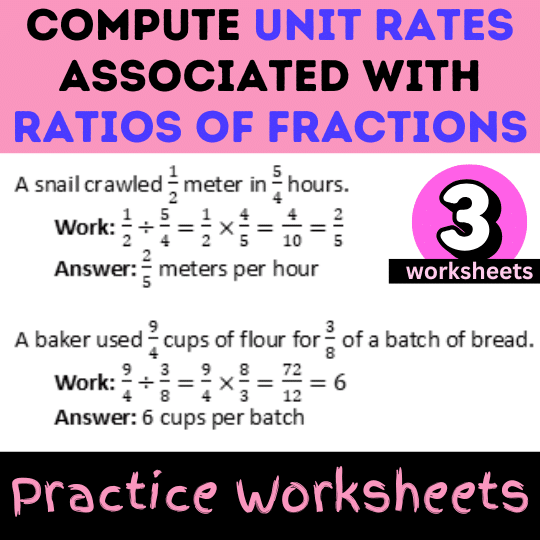
Tip 5: Don’t Use the Same Boring Worksheet
You can provide lots of practice and give immediate feedback without having to use the traditional worksheet. Don’t get me wrong, I still use the worksheet above, especially when I want to provide a lot of practice, quickly (for example, when we’re doing work together, in class).
But when I want to do stations, or differentiated practice, or if someone is assigning problems for homework or independent practice, I recommend mixing it up.
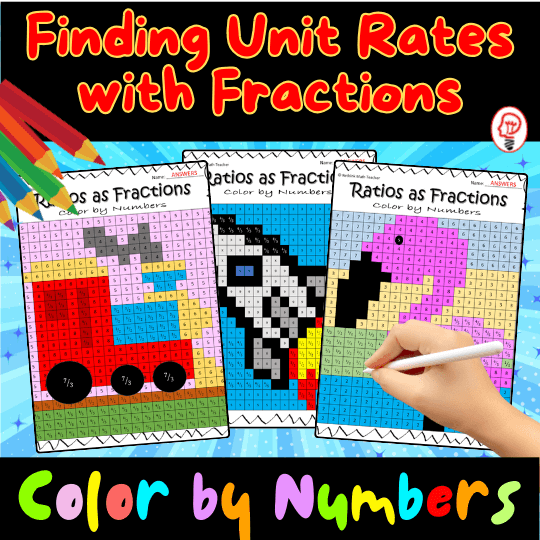
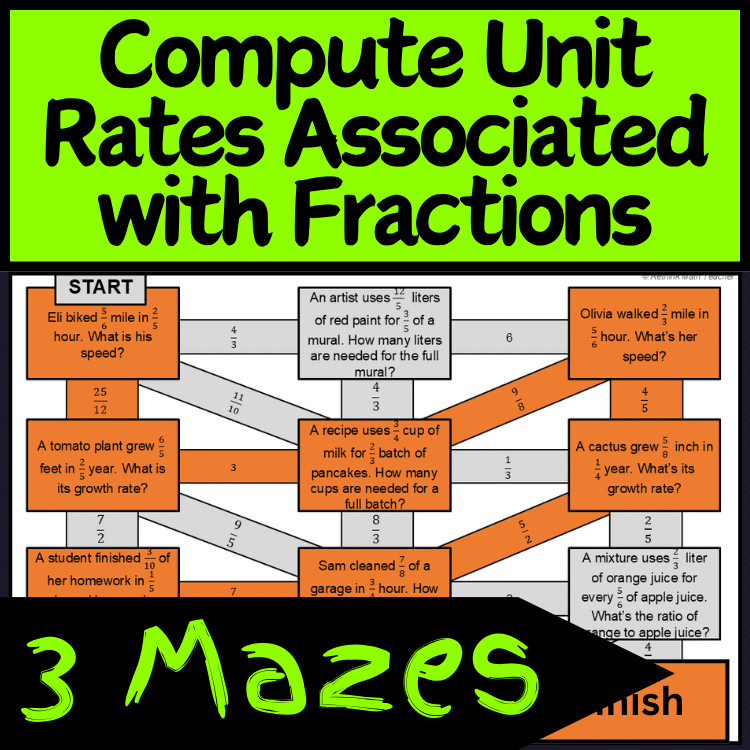
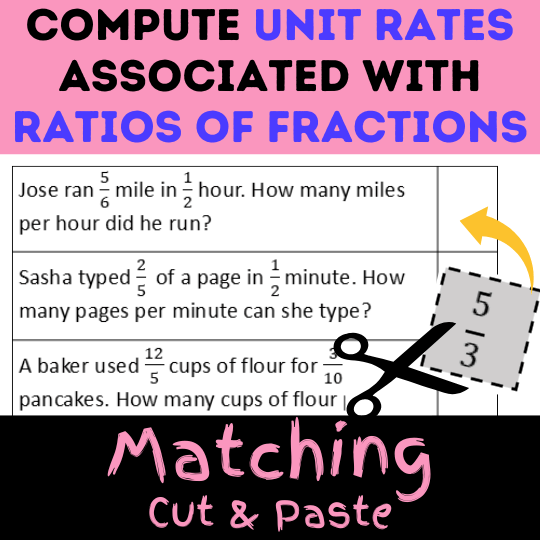
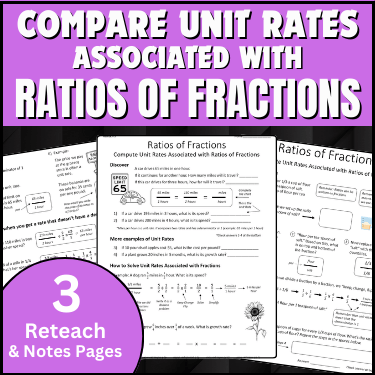
Here are some different ways to practice the skill, that’s still valuable and a good use of time.
Leave a Reply