

Billy kept talking to the students around him. After several reminders, Mrs. Scarlet told him to change his seat. Billy argued with her and ultimately said, “I don’t want to.”
“Fine,” replied Mrs. Scarlet, “Then go sit in the office.”
“That’s okay,” Billy responded, and moved seats as he had been instructed.
Mrs. Scarlet feels like she has won the battle with Billy. But I’m here to tell you she has not. She has made things more difficult.
She told Billy to move his seat. He did not. Then she told him to go to the office, and he didn’t do that either.
Beyond his blatant disobedience, a signal has been sent to the whole classroom: if Mrs. Scarlet tells you to move your seat, you don’t have to unless she says, “Go to the office.” Once she says those words, you need to move your seat; until then, you can argue and disobey without consequence.
Classroom Management: Don’t Threaten
If you say something, you have to follow through.
In the above scenario, Mrs. Scarlet told Billy to move seats, and he didn’t. So she needs to escalate consequences, not make threats.
If she told Billy to move seats, then the expectations are that he will, and the entire class needs to understand that. If she told him to go to the office, those are the new expectations, and he needs to follow them.
The way it played out, Mrs. Scarlet is now going to have to fight him (and other students) on every matter. She’s going to find herself saying, “Go to the office,” and making other idle threats a lot; all to get her original command complied with.
And what will she do when she actually wants someone to go to the office? In the past, when she said that, she just meant to follow the previous set of instructions (to change seats). How is a student to now know that he actually needs to go to the office? Those words have never meant that before.
She shouldn’t have said, “Go to the office.” Unless she actually wanted him to go.
Do This Instead of Making Threats
When a student is challenging your authority and not doing what you instructed him to do, repeat your instructions, don’t make threats. I like to give them a moment, especially for older students. I walk away so it doesn’t look like a power struggle, and give them a chance to follow the instructions. If they don’t, I repeat them and say, “Make a good choice.”
If the student argues with me, I just repeat the instructions: “Move to this seat now, please.” No threats. No warnings about future consequences. No yelling. Just a kind, firm repeat of the instructions.
If the problem continues, then I will escalate the consequences. And once I escalate the consequences, we don’t go backwards. In other words, if I had been in Mrs. Scarlet’s shoes, when I said, “Go to the office,” and the student said, “That’s okay, I’ll move seats,” that would not be an option anymore. He had that choice, just like he previously had a choice to stop misbehaving.
Otherwise, the pattern will never stop.
Billy didn’t stop talking when I asked, so I moved his seat. Then he wouldn’t move his seat when I asked, so now he has an escalated consequence. Misbehavior and open defiance have consequences, and that needs to be clearly communicated through your actions on how you choose to handle the situation.
Finally, don’t threaten a student. “If you don’t do this, then I’m going to have to…” The student needs to make a good choice because you told them to, or because those are the rules, not because they’re weighing the pros and cons of the threatened consequence. They need to follow the instructions because you’re the teacher, not because of the threat you’ve made. And because they need to be respectful, kind individuals. Not because they are afraid of the consequences.
They need to follow instructions and class rules because its the right choice, not because they are avoiding the consequences of another choice.
So don’t threaten. Tell them the expectations.
Classroom Management Tip: Have a Plan
Don’t say something unless you mean it.
When Mrs. Scarlet said, “Go to the office,” she needs to have meant that. Otherwise, it meant nothing. And if those instructions didn’t mean anything, then neither do other ones that she gives to her students.
Think through your next steps before you say something.
Is sending the student to the office the next step in your classroom management procedure?
Mrs. Scarlet, and you, and me; we all need to have a plan. What is our next step when a student is openly defiant? When they won’t do what you asked them to do?
This is why it’s important to think through your policies and procedures. How will you resond to a student who keeps talking during the lesson? Who won’t move seats when told? Who arrives to class 15 minutes late?
You need to think through all of these possible occurrences and have a plan for how you will handle it before it happens. If you want help thinking through them, I have a brainstorming worksheet that will help you do just that. Click here to check it out.
Don’t Say it, Unless you Mean It
Not that long ago, I watched an administrator walk up to a student in the cafeteria. The student was making a weird cackling noise over and over again.
The administrator told the student to stop making those noises, but the student did not. The administrator repeated her request, but the student continued to ignore the admin and kept laughing wierdly over and over again. Finally, the administrator rolled her eyes and walked away. The student and her friends all began laughing for real once the administrator left.
Again, what message has been communicated to the students who witnessed this event? Answer: If a teacher or administrator tells you to stop doing something, you might not have to.
To be fair to the admin, what was she going to do? Send her to the office or call home because the kid was laughing? That’s a weird conversation to have, right?
But then again, why did the administrator tell the student to stop? I know the answer is because it was annoying, but what was the administrator’s plan when she refused to comply? She didn’t have one.
The administrator didn’t mean what she said. And now she’s going to have issues in the future when she tells this student and her friends to do something, because they have observed that there are no consequences for not following instructions.
Don’t tell a student to go to the office, switch seats, stop making noises, or anything else unless you plan on following through. Otherwise, you’re going to have to fight your students on everything, because they won’t know when you mean what you say and when you don’t.
What about Grace?
Does this mean that every time you give a command or issue a consequence, you can’t take it back? You can’t have compassion? You can’t decide that you gave too hard a consequence and it should lighten up?
Of course you can. But tread carefully. You don’t want your students to get into the habit of questioning if you mean what you say. You don’t want your students to think that if you said there was a consequence, they can get out of it by making promises, or pestering you, or crying, or being even more rude.
Which brings us back to what we said at the beginning. You need to have a classroom management plan in place so you know how to respond to certain situations. And you have to mean what you say.
How to Develop Your Classroom Management Plan?
I recommend you think through all of your policies and procedures.
Procedures: Think through how you want your students to do everything that normally happens during the school day: enter the room, get out their supplies, ask to go to the bathroom, pack up to leave, and on and on.
Policies. What are your class rules? What will you do when they’re not followed? How will you handle situations when students don’t follow your instructions? Or the consequences you’ve administered?
Make sure you are following any policies and procedures that your school and administrative team have already laid out.
If you want help thinking through your policies and procedures, you can get this worksheet on my TeachersPayTeachers store for 95 cents.
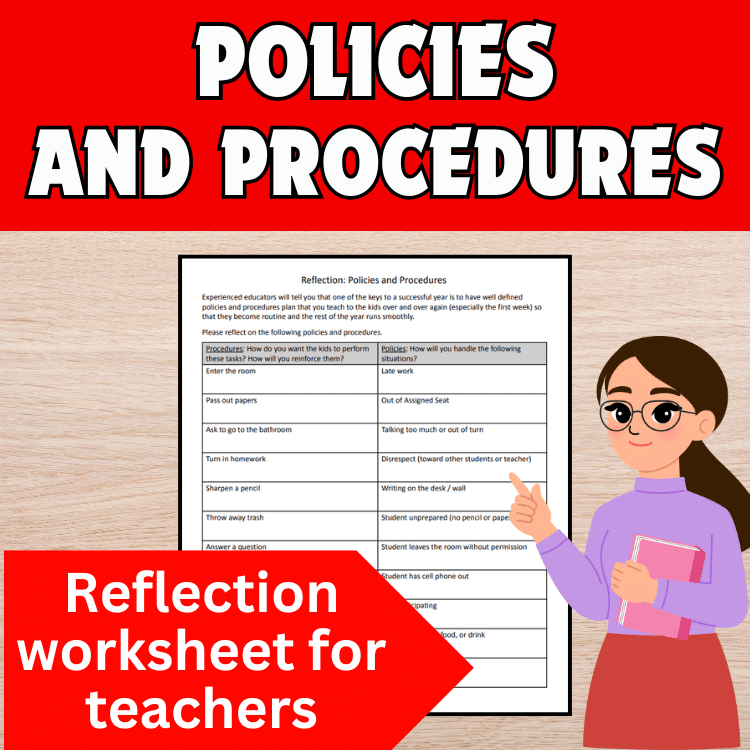
You can also get this worksheet, and other reflection worksheets for your students, plus help thinking through and outlining your classroom management plan when you get my book: Taking Control.
Leave a Reply